20/07/2026
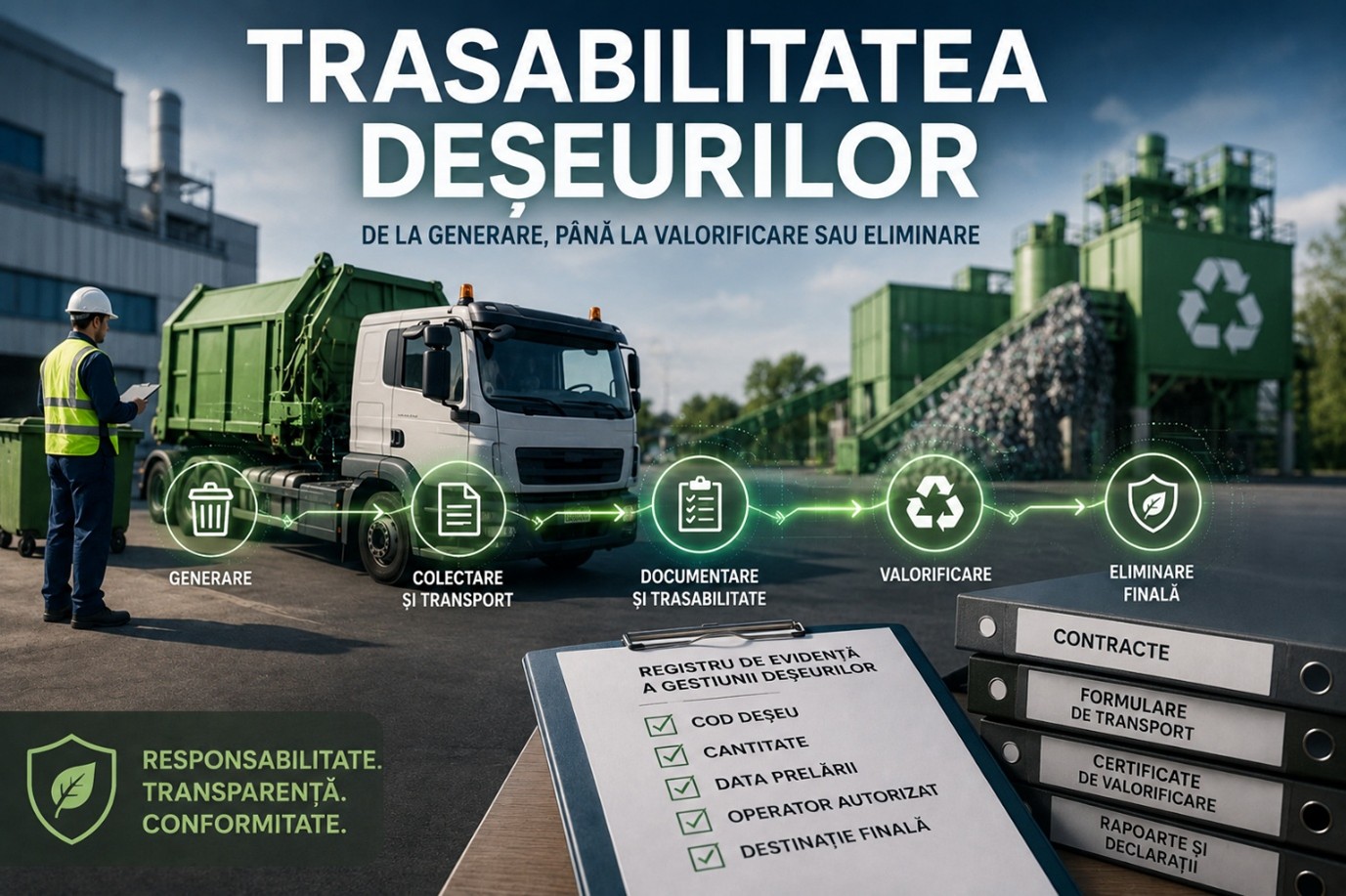
For many companies, the moment their waste is handed over to an authorised collector is seen as the end of their responsibility for it. In reality, environmental legislation imposes far broader obligations, one of the most important being to ensure waste traceability throughout the entire management chain.
With environmental authorities stepping up inspections and growing emphasis on the circular economy and resource recovery, a company’s ability to demonstrate the full journey of the waste it generates has become an essential compliance requirement.
What is waste traceability?
Waste traceability is the ability to track waste from the moment it is generated until its final recovery or disposal.
Under Government Emergency Ordinance No. 92/2021 on the waste regime, every waste producer or holder is responsible for managing that waste and for complying with the associated legal obligations. In practice, this responsibility does not end when the waste leaves the company’s premises; it requires the ability to demonstrate, through supporting documents, that the waste was managed lawfully and reached the appropriate destination.
In other words, traceability is proof that the waste generated by a company has been collected, transported, recovered or disposed of through authorised operators, and that it has not been abandoned, disposed of in an uncontrolled manner or managed in breach of environmental protection rules.
Why is traceability essential?
Traceability ensures transparency and accountability throughout the waste management chain and is one of the main tools used by the authorities to verify compliance with environmental legislation.
Through traceability, the authorities can:
For businesses, traceability is equally a legal safeguard. Complete and consistent records make it possible to demonstrate compliance with legal obligations and can be a key element in the event of an inspection by the National Environmental Guard or other competent authorities.
How is waste traceability demonstrated?
To demonstrate traceability, a business must be able to produce, at any time, the documents reflecting the entire journey of the waste.
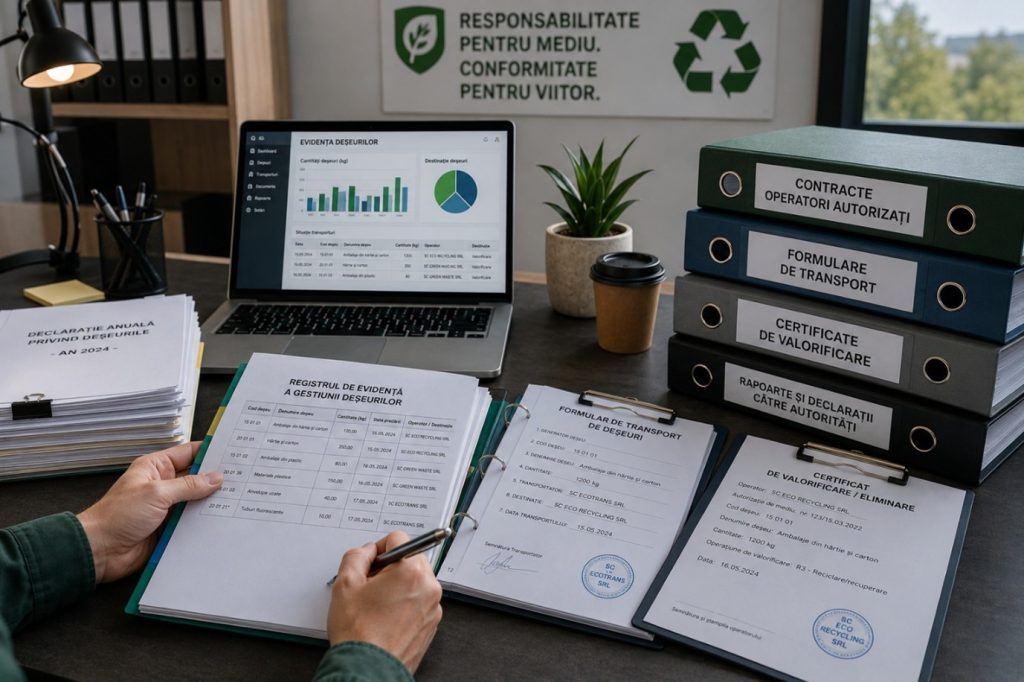
The essential documents include:
This is the main document used to track the quantities of waste generated, the waste codes, the dates of transfers and the operators involved in managing the waste.
The register must be updated regularly, in accordance with the legal requirements, and kept so that it can be presented to the inspection authorities.
These documents show that waste is handed over exclusively to operators holding the permits required for collection, transport, recovery or disposal.
Checking the validity of these permits is an important step in the compliance process.
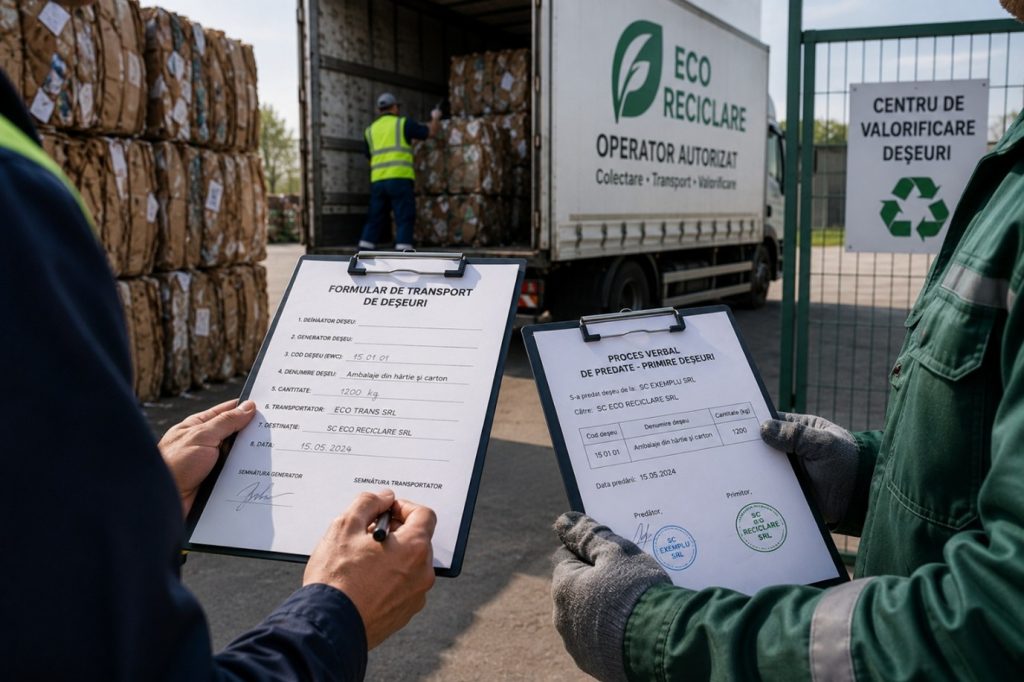
These documents accompany the transfer of waste and make it possible to identify the type of waste, the quantities transported, the carrier and the final destination.
They are one of the most important elements of traceability, as they allow the waste to be effectively tracked during transport.
Issued by authorised operators, these documents confirm that the waste has been recovered, recycled or disposed of in accordance with the law.
Without them, it may be difficult to prove the final destination of the waste.
The reported data must be consistent with internal records and with the supporting documents for the transfers made.
Any discrepancy may raise questions during an inspection and lead to further checks.
How is traceability ensured in practice?
Full traceability requires documenting every stage of the waste’s life cycle.
The process typically involves the following stages:
Only when all these elements are in place can a complete, verifiable and transparent chain be demonstrated.
The risks of a lack of traceability
In practice, one of the most common shortcomings identified by inspection authorities is that businesses are unable to demonstrate the full journey of the waste they generate.
Missing supporting documents, inconsistencies between internal records and transport documents, or the inability to prove the final destination of the waste may lead to administrative fines and significant difficulties in dealings with the authorities.
That is why simply handing waste over to an authorised collector is not enough. The business must be able to demonstrate, through documents, every stage of the management process.
The benefits of proper traceability
Beyond the legal obligations, implementing an effective traceability system brings tangible benefits to businesses:
Traceability should therefore not be seen solely as a bureaucratic obligation, but as a tool for managing and controlling activities with an environmental impact.
Conclusions
The lawful management of waste does not end when it is loaded onto a lorry and leaves the company’s premises. From the perspective of environmental legislation, a business’s responsibility involves not only handing waste over to an authorised collector, but also being able to demonstrate, at any time, its full journey – from generation to final recovery or disposal.
In practice, one of the most common mistakes among businesses is the belief that simply having a contract with an authorised collector is enough to meet their legal obligations. In reality, the authorities look for a complete documentary chain that allows every stage of the waste management process to be verified. Missing supporting documents, inconsistencies between internal records and transport documents, or the inability to prove the final destination of the waste may raise suspicions and lead to significant penalties.
Traceability is therefore more than a mere administrative requirement. It is the mechanism through which compliance with legal obligations, environmental protection and responsible conduct of business can be demonstrated. At the same time, it gives the business a safeguard in its dealings with the inspection authorities, allowing it to prove that the waste it generated was managed lawfully.
At a time when environmental compliance requirements are becoming ever stricter and inspections ever more rigorous, implementing an effective record-keeping and traceability system is no longer an option but a necessity. Complete, up-to-date and consistent records of waste management documents reduce legal risks, facilitate inspections and help build the image of a responsible business.
In waste management there is a simple but essential rule: what cannot be proven by documents is, more often than not, considered not to have been done. For this reason, traceability should be seen not only as a legal obligation, but as a fundamental component of conducting business responsibly and in line with environmental protection rules.
Author: P.A.
Copyright © 2026. All rights reserved.
