30/10/2026
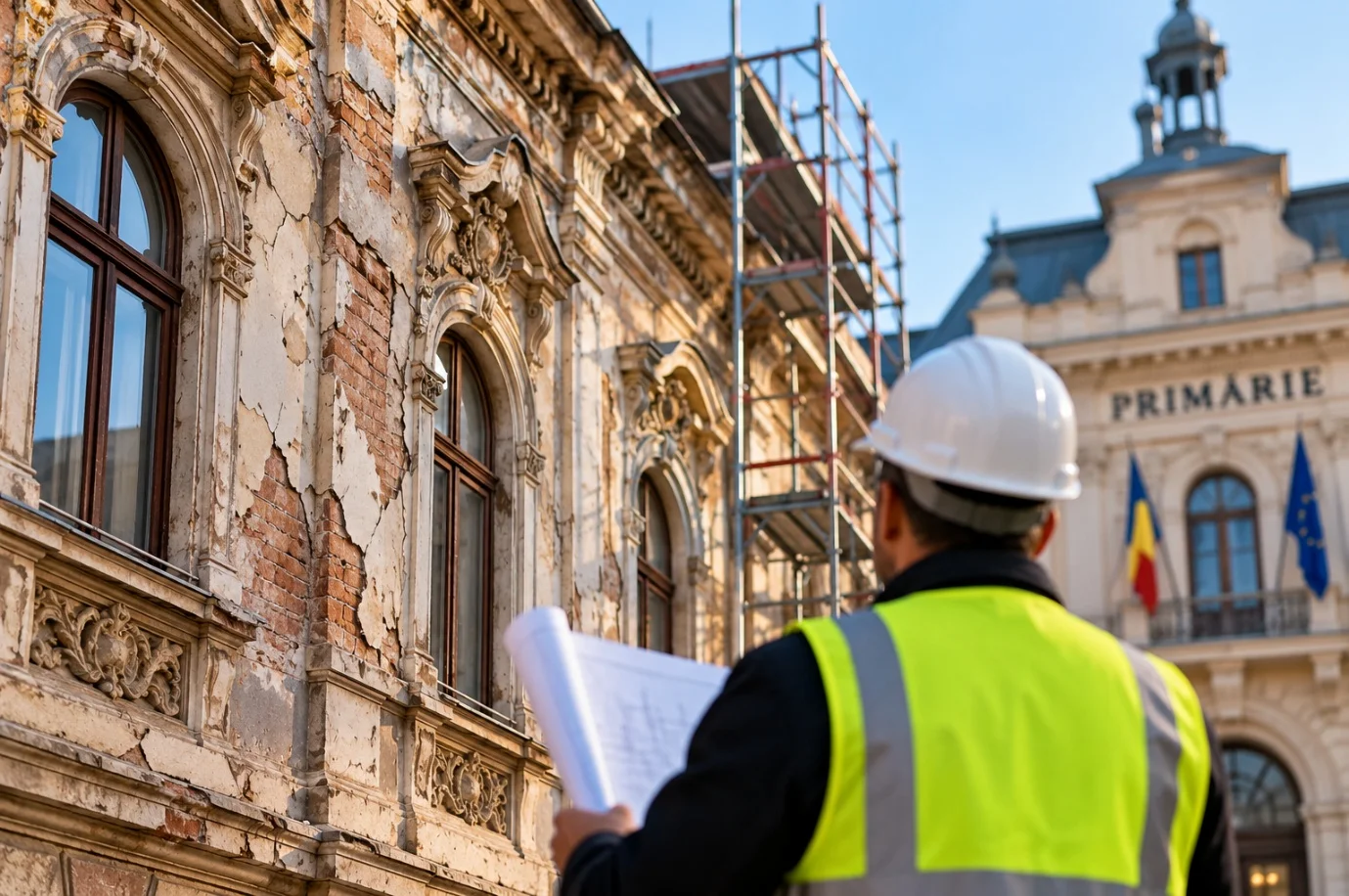
Legislative proposal B577/2026, currently under debate in the Senate, seeks to allow local authorities to carry out maintenance, conservation and modernisation works on the façades of buildings listed as historic monuments, even where the buildings are privately owned. Although the initiative aims to protect the cultural heritage and the urban landscape, the proposed mechanism raises important questions regarding the right of ownership, the challenge procedure and its relationship with existing legislation.
Several deputies have initiated a draft law that would allow city halls to intervene on the façades of buildings listed as historic monuments, including where these are not owned by the local authorities.
The legislative proposal, registered with the Senate under number B577/2026 on 20 October 2026, seeks to provide local administrations with a framework for intervening on deteriorated historic buildings, particularly where owners fail to carry out the necessary works or where ongoing disputes make decision-making difficult. The initiators argue that the lack of a sufficiently clear mechanism prevents the effective protection of heritage and affects the urban appearance of towns and cities.
Under Article 1 of the draft, local authorities could carry out modernisation, maintenance and conservation works on façades even if they do not own the buildings concerned. Article 4 provides that the works must be limited to the façade, comply with the rules on the protection of cultural heritage and be carried out by authorised companies, under the supervision of the chief architect or of a specialist in the restoration of historic monuments.
The city hall would also be responsible for ensuring that the works do not damage the original elements of the building.
The draft introduces a procedure for prior notification of the owner. Under Article 5, the owner would have to be informed at least 20 days before the works begin.
The notification would have to include a description of the works and the methods used, the estimated duration of the intervention, the work schedule, the reasons for the works, the details of the contractor and information on the body that is to verify the intervention.
The owner could submit observations or objections within seven days of receiving the notification. Under Article 6, observations that do not point to major risks would not suspend the works, whereas objections signalling significant risks would be examined by an authorised body.
That body could order the postponement of the works only where there is concrete evidence. In the absence of objections or observations deemed well-founded, the city hall could begin the intervention in accordance with the notified plan.
Consequently, the owner's consent would no longer be a condition for carrying out the works, within the limits of the proposed mechanism.
Although protecting the cultural heritage is a legitimate public-interest objective, the possibility of intervening on a privately owned building must be assessed against the constitutional guarantees of the right of ownership.
Article 44 of the Romanian Constitution guarantees private property. This right is not absolute, and owners of historic monuments have specific obligations to preserve and protect their property. Nevertheless, the existence of a public interest does not automatically justify any intervention by the authorities on private property.
A first problem with the draft is that it covers both maintenance and conservation works and modernisation works, without setting out sufficiently clearly the criteria that justify each category of intervention.
The situation of a façade that poses a danger to passers-by is different from that of a building requiring works to improve its external appearance. In the first case, protecting public safety may require urgent measures, under the conditions laid down by law. In the second, the need for intervention must be assessed in light of the actual condition of the building, its protection regime and the owner's rights.
Clear regulation should distinguish between urgent interventions, works strictly necessary for conservation and modernisation works of a predominantly aesthetic nature.
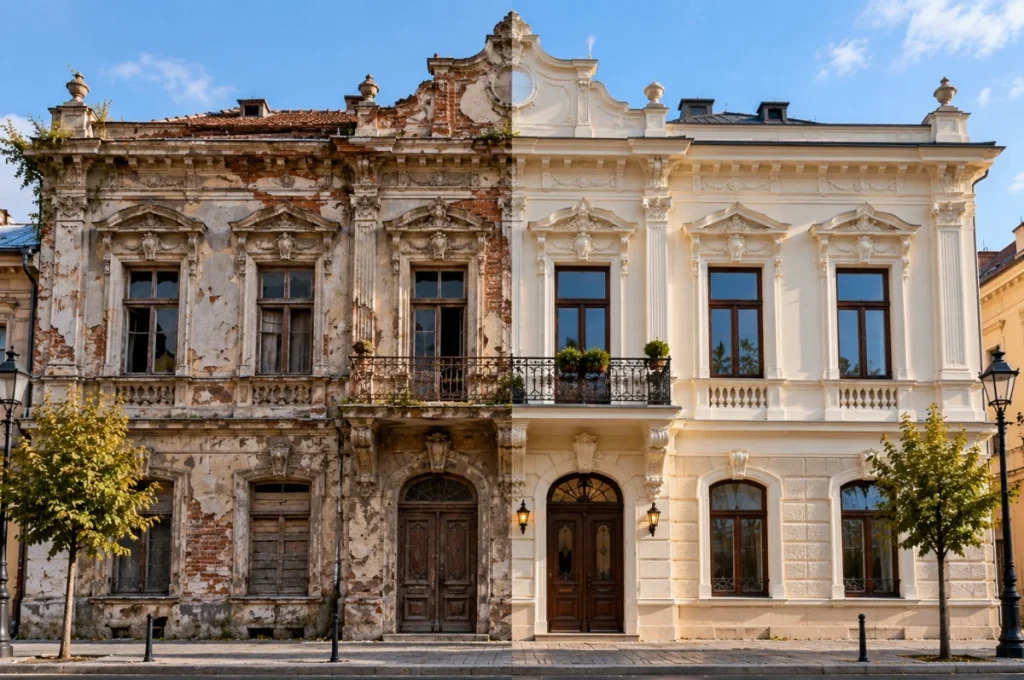
Another weak point is the challenge procedure provided for in Article 6.
The seven-day period may be difficult to meet where the owner needs to review technical documentation, consult a specialist in the restoration of historic monuments or obtain an independent opinion on the effects of the intervention.
In addition, the draft does not define with sufficient precision the body competent to resolve objections, the applicable procedure or the criteria for establishing the existence of significant risks.
Nor are the effects of an objection regulated with sufficient clarity. As proposed, the wording under which the works may be postponed only where there is concrete evidence leaves open questions regarding the burden of proof, the assessment of risk and the owner's ability to obtain the suspension of the intervention before any damage occurs.
In the case of a historic monument, the consequences of an inappropriate intervention may be irreversible. The removal of an original ornament or the use of materials incompatible with the historic structure of the façade does not always amount to damage that can later be fully remedied through compensation.
For this reason, the procedure should provide effective safeguards for preserving the original elements and for challenging the measures before the works are carried out.
The legislative proposal must also be examined in relation to Law No 422/2001 on the protection of historic monuments and Law No 153/2011 on measures to improve the architectural and environmental quality of buildings.
Law No 422/2001 lays down a special regime for interventions on historic monuments, including requirements concerning approvals and the protection of their cultural value. In this context, draft B577/2026 should specify how the powers of city halls are coordinated with the powers of the cultural authorities and with the existing authorisation and approval procedures.
A notification addressed to the owner must not be confused with the approvals or permits that may be required under the applicable legislation. The draft should expressly clarify that an intervention by the local authority does not remove the legal obligations concerning the protection of the historic monument.
It must also be established what happens where administrative measures concerning the rehabilitation of the façade are already in place, where there are court proceedings relating to the building or where co-owners disagree.
Without a clear delimitation, the new rules risk creating overlapping powers and difficulties of application.
Under Article 8 of the draft, the costs of the works would be borne in full by the local authority, without being invoiced to the owner.
At the same time, Articles 9 and 11 provide for responsibilities regarding compliance with technical standards, supervision of the works, remedying of inappropriate interventions and compensation for any damage.
This solution may reduce the financial burden on owners and facilitate the preservation of historic buildings. However, the use of public funds requires objective criteria for prioritising interventions, documentation of the need for the works and transparency in the choice of technical solutions and contractors.
At the same time, the liability regime must be clarified for cases where the works affect original elements, cause water infiltration or otherwise damage the building. The owner must have effective means of establishing the damage and obtaining compensation, without the procedure becoming excessively difficult.
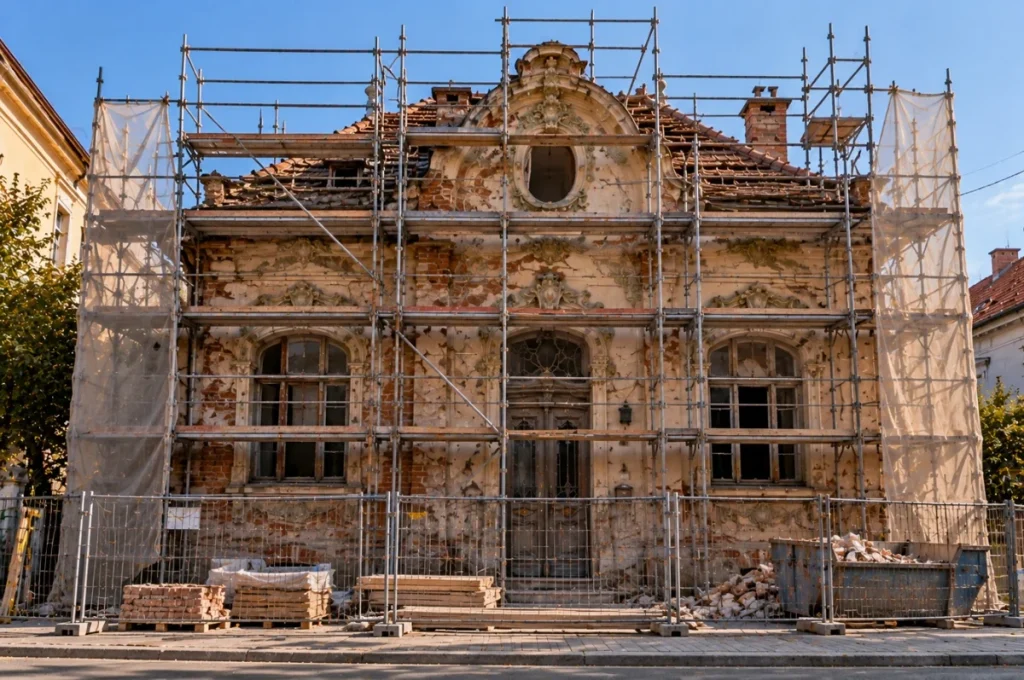
The draft could be improved by setting objective criteria for triggering an intervention, including a technical assessment of the deterioration and a justification of the need for the works.
The powers of the body examining objections, the effects of objections and the conditions under which works may be suspended should be defined more precisely. Safeguards would also be needed regarding the documentation of the condition of the façade before and after the intervention, the preservation of original elements, the acceptance of the works and liability for damage.
Last but not least, the text should be expressly aligned with the legislation on the protection of historic monuments and with the regime of the required approvals and permits.
Draft B577/2026 attempts to give city halls an additional tool for protecting historic heritage, particularly where the deterioration of buildings and the owners' failure to act affect public safety or the urban landscape.
Nevertheless, the effectiveness of such rules should not be assessed solely by how quickly the authority can begin the works. Equally important are the lawfulness of the intervention, the proportionality of the measure, the preservation of the building's historic value and the effective protection of the owner.
Protecting historic heritage should not be set against the right of ownership. Balanced regulation must allow the authorities to intervene where this is justified, while setting out sufficiently clearly the conditions, limits and safeguards under which such intervention may be exercised.
Legislative proposal B577/2026 is registered with the Senate for debate, and information published by the Senate indicates 19 November 2026 as the deadline for public consultation. The initiative should not be confused with a law already in force. Interested citizens and specialists may submit observations within the parliamentary procedure.
Author: P.A.
Copyright © 2026. All rights reserved.
