21/04/2026
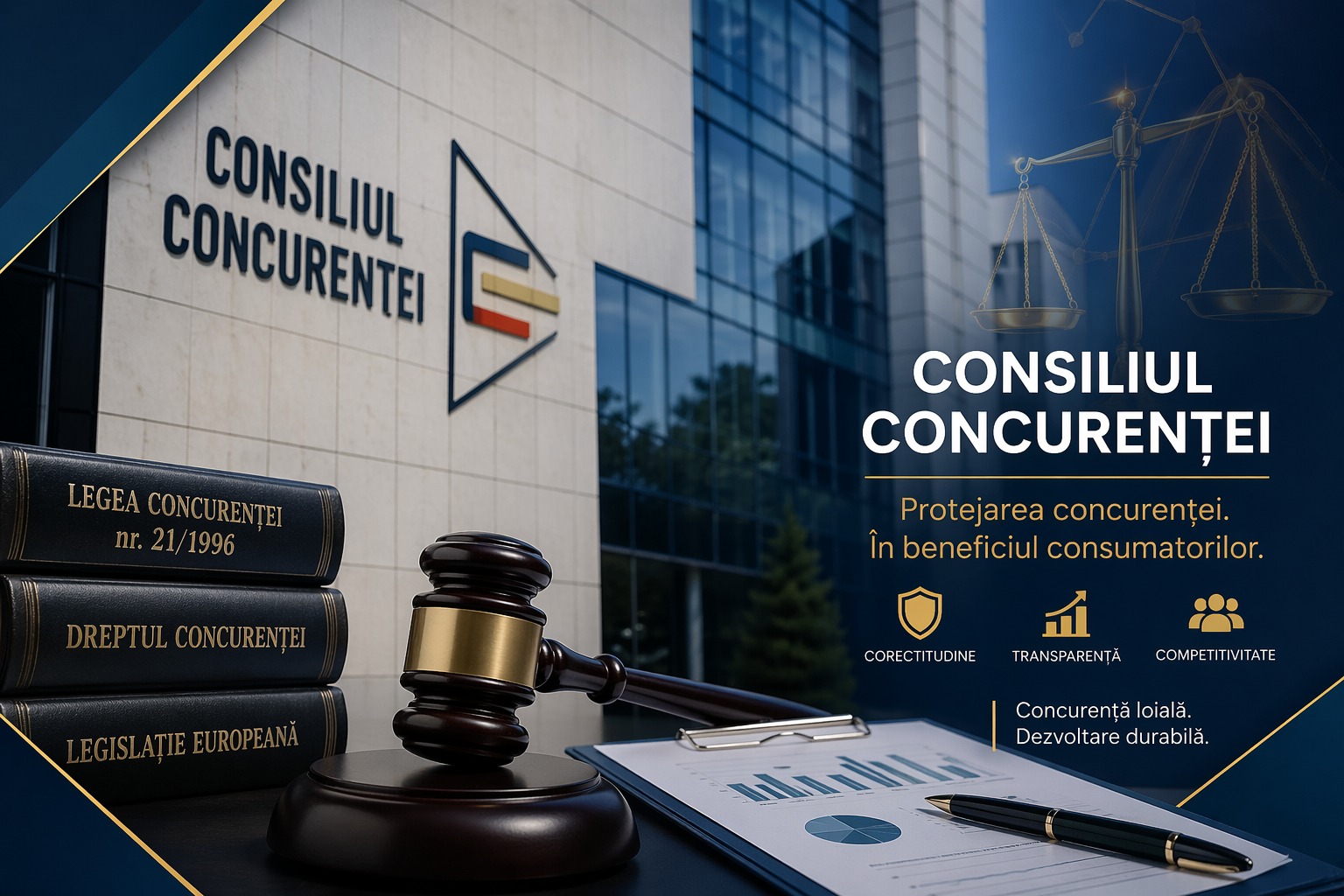
In the legal architecture of a market economy, competition is not merely a theoretical principle but an essential mechanism for regulating commercial relations. In this context, the Competition Council stands out as the key institution vested with powers to monitor, control and sanction conduct that impairs the normal functioning of the market.
The institution began its activity in 1996, following the establishment of the regulatory framework required to apply Competition Law No. 21/1996, thereby becoming the cornerstone of competition policy in Romania.
The mission of the Competition Council is to protect, maintain and stimulate a healthy competitive environment, with a view to promoting consumers’ interests.
Its activity operates on two complementary levels:
At the same time, the institution acts as the interface between the national authorities and the European Commission in matters of State aid, thereby strengthening Romania’s integration into the European competition framework.

The scope of the Competition Council’s powers reflects the complexity of its role, combining investigative, decision-making and advisory functions.
Accordingly, the institution:
notifies public authorities of administrative interventions with an anti-competitive impact.
Through these prerogatives, the Council is not merely a sanctioning body, but also an active player in shaping public policies with an economic impact.
Competition legislation lays down firm prohibitions on certain forms of conduct deemed incompatible with a market economy.
A defining feature of the Competition Council’s activity is its investigative mechanism, carried out by specialised inspectors on the basis of extensive powers.
They may:
Investigations are conducted under strict conditions of legality, with judicial authorisation required for certain intrusive measures, including access to private premises.
In their dealings with the competition authority, businesses are bound by a number of essential legal obligations:
Failure to comply with these obligations constitutes, in itself, a sanctionable infringement.
Competition law establishes a severe sanctions regime, designed to deter infringements and restore market balance.
Sanctions may therefore include:
In addition, mechanisms such as the leniency policy allow for the reduction of, or even full immunity from, sanctions for undertakings that actively cooperate in uncovering cartels.
The Competition Council is not merely a market referee, but a genuine guarantor of economic balance and consumer protection. Through its work, the institution helps to build a business climate grounded in transparency, fairness and competitiveness.
For undertakings, compliance with competition rules is not just a legal obligation but a strategic necessity in a modern, interconnected and heavily regulated economy.
In this context, given the complexity of the rules and the severity of the applicable sanctions, businesses are well advised to seek specialist legal assistance, both to prevent competition risks and to properly handle any investigations or proceedings before the competition authority.
Author: P.A.
Copyright © 2026. All rights reserved.
We use cookies that are strictly necessary for the website to work and, only with your consent, statistics cookies (Google Analytics) that show us how the website is used. You can change your choice at any time under “Cookie settings”.
