25/11/2026

Quick summary: Since 18 December 2025, Law no. 239/2025 has introduced new rules into Companies Law no. 31/1990 for any amount leaving the company for its shareholders: annual dividends, quarterly (interim) dividends, loans granted to shareholders and the repayment of loans received from them. The key threshold is net assets below half of the subscribed share capital. Companies below this threshold may not repay shareholder loans, must restore their net assets within a fixed deadline and, in certain circumstances, are required to convert shareholder loans into share capital. Fines range from RON 10,000 to RON 300,000, with no option to pay half of the minimum, and the shareholder who received the money may be held jointly liable for the company’s tax debts. In October 2026 the Senate adopted a proposal to relax the repayment ban, but it is not yet law.
Until the end of 2025, in many SRLs money flowed freely between the shareholder and the company: the shareholder “lent” to the company when cash was short, took the money back when receipts came in and paid out dividends every quarter. Net assets were monitored, at most, by the accountant at year-end.
Law no. 239/2025 changed this logic. Net assets (equity) have become a mandatory filter through which every amount leaving the company for its shareholders must pass. The stated aim is to stop the decapitalisation of companies: loss-making firms with debts to the state and negative equity, from which shareholders nevertheless recovered their money ahead of other creditors. In May 2026, ANAF (the National Tax Administration Agency) set out the new obligations as four rules and publicly announced that it is checking compliance.
What the law says. Under Article 67(23) of Law no. 31/1990, companies that distribute quarterly dividends may not grant loans to their shareholders or other affiliated persons until the differences arising from the dividends distributed during the year have been regularised, i.e. until the annual financial statements are approved.
Why it matters. A common practice was for the company to pay interim dividends and, if the annual profit turned out to be lower, the difference was left unregularised or covered by loans to the shareholder. The law closes this loop.
Risks. An administrative fine of RON 10,000 to RON 200,000, imposed by ANAF (Article 67(26)). In addition, under Article 67(25), the company and the shareholder who received unregularised interim dividends are jointly liable for the company’s outstanding budgetary obligations administered by ANAF, up to the amounts lent.
Separately, Article 691 (3) provides that a company whose net assets are below half of its share capital according to its interim financial statementsmay not distribute interim dividends out of the current year’s profit unless it has first restored its net assets to the statutory minimum.
For most business owners, this is the rule with the greatest practical impact.
What the law says. Under Article 67(24) of Law no. 31/1990, companies whose net assets, based on the approved annual financial statements, are below half of the subscribed share capital may not repay the loans they have received from their shareholders or other affiliated persons.
Risks. A fine of RON 10,000 to RON 200,000, with no option to pay half of the minimum within 15 days (Article XXV of Law no. 239/2025). In addition, the company and the shareholder to whom the amounts were repaid are jointly liable for the company’s outstanding budgetary obligations, up to the amounts repaid. The law refers to the latest approved annual financial statements. In its press release of 13 May 2026, ANAF stated that it is checking companies whose statutory deadline for filing financial statements falls in 2026 (financial year 2025) and will sanction loan repayments made after those financial statements were approved.
Please note: many SRLs carry old and large balances in account 455 (“amounts owed to shareholders”). Every repayment from these balances must now be checked against the latest approved balance sheet, not just against the cash available.
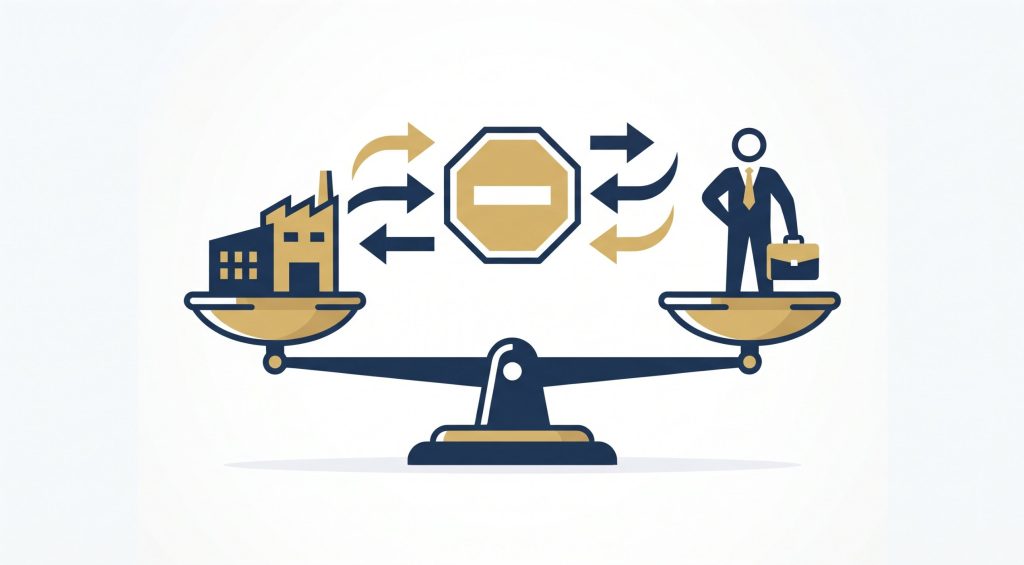
Before Law no. 239/2025, a fall in net assets below half of the share capital only required an extraordinary general meeting to be convened to decide on dissolution. If dissolution was not resolved, the company had to reduce its share capital by the end of the financial year following the one in which the losses were established, unless its net assets had been restored (Article 15324 (4)). In practice, many companies did nothing.
Now, failure to restore net assets to at least half of the share capital within this deadline is an administrative offence punishable by a fine of RON 10,000 to RON 200,000 (Article 15324 (41)). The rule applies accordingly to SRLs as well (paragraph (44)). Under paragraph (45), ANAF will establish and sanction these offences from 2027 onwards, for financial statements covering financial years beginning on or after 1 January 2025. The sanction becomes time-barred 12 months after the offence and does not apply while the company is declared inactive.
The consequences for directors and the risk of dissolution are discussed in our article on net assets below half of the share capital.
This is the most severe measure and, for many shareholders, the most unexpected. Under Article 15324 (42), which also applies to SRLs, companies with net assets below half of the share capital that have debts to shareholders arising from loans or other financing and that fail to restore their net assets or reduce their capital within 2 years of the end of the financial year following the one in which the losses were established are required to increase their share capital by converting these receivables, while respecting the rights of the other shareholders.
The penalty is the heaviest in the whole package: a fine of RON 40,000 to RON 300,000 (paragraph (43)), again with no option to pay half of the minimum.
The example given in ANAF’s press release of 13 May 2026:
Exceptions. The law exempts certain categories of lenders from the penalty for failing to restore net assets and from the conversion obligation, such as investment funds and their managers, holding or financing companies (NACE/CAEN 64), professional investors and investors in crowdfunding projects, provided that the loans are not repaid within 4 years of being granted (paragraph (49)). Conversion also does not apply to financing from European or national funds intended for the private sector or to financing granted by international financial institutions (paragraph (410)).
What the shareholder loses through conversion. The money lent ceases to be a receivable the shareholder can recover and becomes a capital contribution, recoverable only through future dividends, a capital reduction or liquidation. Where the company has several shareholders, conversion also changes the shareholdings, so it must be negotiated and documented carefully. The Trade Register procedure is explained in our article on increasing the share capital of an SRL in 2026.

The law has also added filters for ordinary dividends distributed after the balance sheet is approved:
In other words, a good year no longer automatically “washes away” the weak years.
The bans on granting and repaying loans do not target only the direct shareholder, but also affiliated persons. The law does not refer to the Tax Code but to the definition in the applicable accounting regulations. In practice, a loan to or from another company in the same group, or controlled by the same shareholders, should be analysed as carefully as a loan made directly to the shareholder.
On 28 October 2026, the Senate adopted legislative proposal L527/2026 (60 votes in favour, 10 against, 19 abstentions), entitled “Legislative proposal amending Article 67(24) and (25) of Companies Law no. 31/1990”. Under the version adopted by the Senate, the repayment ban remains the rule, but loans received from shareholders and recorded separately in the accountscould be repaid in full or in part if two cumulative conditions are met: on the repayment date, the company has no certain, liquid and due unpaid obligations to employees, the general consolidated budget or non-affiliated creditors, and after the repayment its cash covers its obligations to these creditors falling due within the next 30 days. Joint liability for outstanding budgetary obligations is retained, up to the amounts repaid in breach of the law.
Important: the draft has been sent to the Chamber of Deputies, which is the decision-making chamber, and has no legal effect yet. During the procedure, the initiative received negative opinions from the Legislative Council, the Economic and Social Council, the Government and the Senate’s budget and finance committee, so its final form and even its adoption remain uncertain. Until the law is adopted, promulgated and published in the Official Gazette, the repayment ban applies in its current form. We will update this article once the legislative procedure is complete.

Before the 2026 financial year closes, a few questions are worth clarifying:
The answer is not the same for every company. A single-shareholder SRL with a small loan has entirely different options from a company with several shareholders, investors or group financing, and each option has different effects on control of the company, on taxation and on its relationship with banks. The worst-case scenario is for the problem to come to light only during an ANAF inspection, when the deadlines have passed, the fines apply and the shareholder is liable with their own money.

Our firm works exclusively with legal entities, with clients throughout Romania. We can analyse your company’s specific situation, draft the general meeting resolutions or sole shareholder decisions and handle the entire Trade Register procedure for increasing or reducing share capital or converting receivables. Contact us for an assessment.
Can I repay the shareholder loan if the company now has money in the bank?
Not necessarily. What matters is the net assets shown in the latest approved annual financial statements, not current liquidity. If the approved balance sheet shows net assets below half of the share capital, repayment is prohibited until an approved balance sheet confirms that they have been restored.
Does the ban also apply to loans granted before Law no. 239/2025?
The ban concerns repayments made after the amendments came into force (18 December 2025), regardless of when the loan was granted. What counts is the time of payment, not the date of the contract.
Can I still distribute interim dividends?
Yes, if the legal conditions are met: interim financial statements, profit actually made and net assets above the threshold. After the distribution, however, the company may not grant loans to shareholders or affiliated persons until the regularisation through the annual financial statements.
Is converting the loan into capital mandatory for every loss-making SRL?
No. It becomes mandatory only if net assets have fallen below half of the share capital, have not been restored and the capital has not been reduced within the statutory deadline, and the company owes its shareholders amounts from loans or other financing. Until then, there are other solutions, which should be analysed in good time.
Who imposes the fines, and can I pay half of the minimum?
The fines are imposed by ANAF. For these offences, the law expressly excludes the option of paying half of the minimum fine within 15 days.
Does the draft passed by the Senate already allow me to repay the loan?
No. Draft law L527/2026 is still going through the parliamentary procedure. Until it enters into force, the current ban in Article 67(24).
This article is for information purposes only and does not constitute legal advice. For an analysis of your company’s specific situation, please contact our firm.
Author: F.R.I.
Is this article useful to you?
Get it as a PDF on our letterhead, to keep or to share.
Get this article as a PDF
We will e-mail it to you on our letterhead, so you can keep it or pass it on to colleagues.
Copyright © 2026. All rights reserved.
We use cookies that are strictly necessary for the website to work and, only with your consent, statistics cookies (Google Analytics) that show us how the website is used. You can change your choice at any time under “Cookie settings”.
