12/05/2026
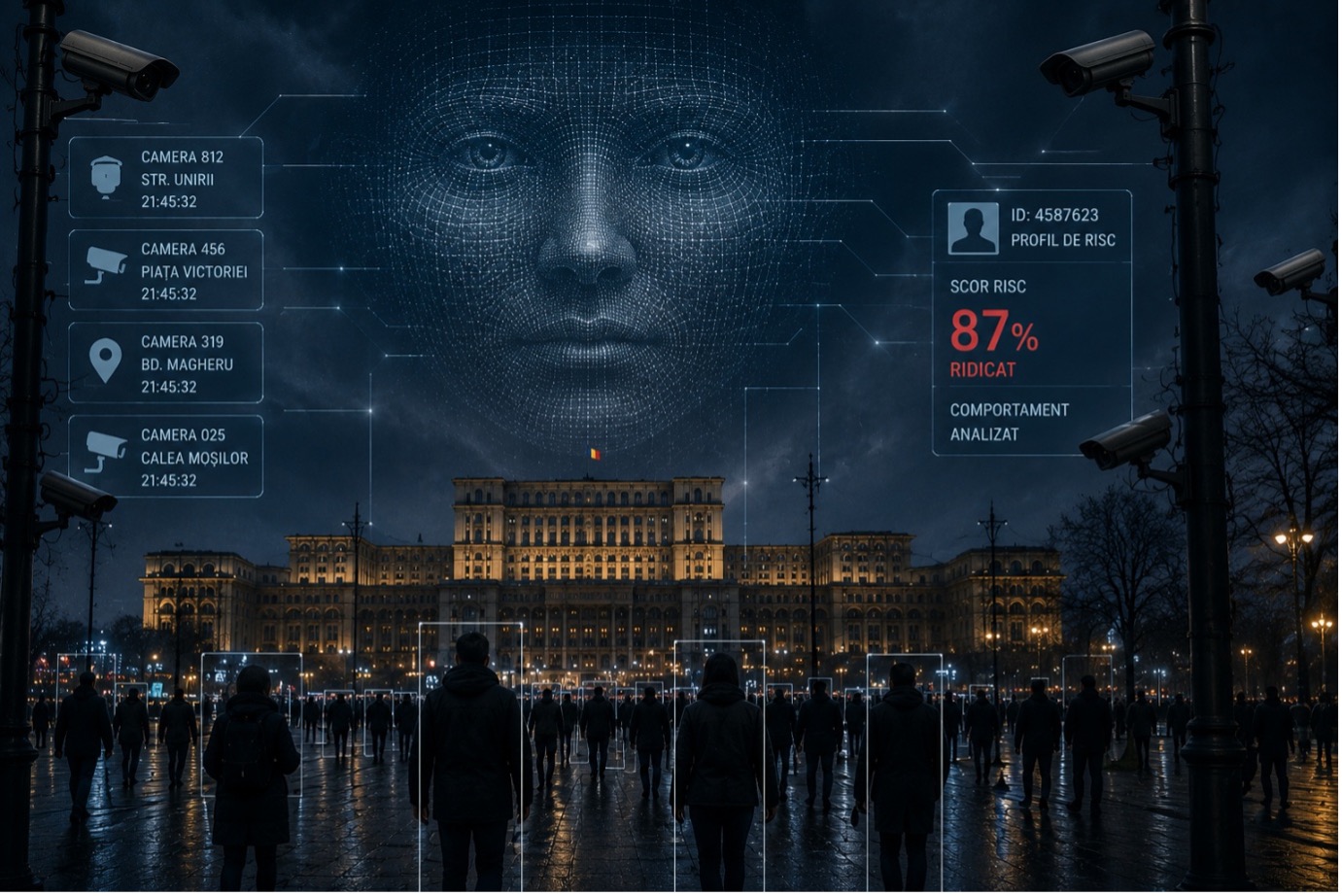
There are moments in history when technological progress outpaces the law's capacity to control it. At such moments, society stands at a critical juncture: either it turns technology into an instrument of freedom, or it allows technology to become the architecture of a new form of domination.
The GOTHAM platform, developed by Palantir Technologies, is one of the most powerful expressions of this contemporary dilemma. Originally designed to combat terrorism and support intelligence activities, the platform has evolved into a system capable of integrating and correlating vast volumes of data about individuals, communities and social behaviour. It is not just software. It is an infrastructure of informational power.
In essence, GOTHAM turns disparate fragments of information — administrative registers, biometric data, travel history, electronic communications, GPS location, video footage, online activity and judicial databases — into a coherent map of human life. What was once dispersed across different institutions becomes a single informational organism, interconnected and permanently open to analysis.
This capability brings about a profound shift in the relationship between citizen and State. Whereas in the past surveillance meant the targeted monitoring of a person on the basis of a specific suspicion, today's technology allows the permanent monitoring of the entire population in order to identify future risks. Suspicion no longer derives solely from an act. It may arise from an algorithmic model.
This is where the real legal problem begins.
The modern legal order was built on a fundamental premise: the power of the State is not unlimited. The entire constitutional architecture of contemporary democracies was designed precisely to prevent public authority from turning into an absolute mechanism of control. From this perspective, individual liberty is the rule, while State interference is the exception, which must be strictly justified by law, limited in time, proportionate and subject to judicial review.
This legal philosophy underpinned the emergence of modern fundamental rights. The right to private life, freedom of expression, freedom of association and the presumption of innocence are not mere theoretical constructs but historical safeguards created to protect the individual against power's constant temptation to extend surveillance and social control.
Platforms such as GOTHAM, however, profoundly alter this traditional logic.
Through their capacity to integrate and analyse vast volumes of data from disparate sources — electronic communications, administrative databases, biometric data, video systems, GPS location, online activity and judicial records — such systems enable the emergence of a new model of governance: the predictive State.
Under this model, the authorities no longer act solely in response to events that have already occurred. Public power begins to operate pre-emptively, seeking to identify potential risks and behaviour deemed likely to be dangerous. Suspicion no longer necessarily derives from specific conduct; it may result from an algorithmic correlation, from membership of a particular social group, from relational proximity or from the identification of statistical patterns that the system considers relevant.
This transformation produces a profound shift in the very philosophy of criminal law and public security. Whereas in the classical paradigm State intervention was justified by the existence of a specific act, in the predictive paradigm intervention comes to be justified by the possibility that an act may occur in the future.
There is thus a dangerous shift from punishing conduct to administering suspicion.
In this context, contemporary law faces questions that go beyond the technological sphere and touch the constitutional core of modern democracy:
Can a citizen become a suspect solely on the basis of a statistical probability generated by an algorithm?
Is it compatible with the rule of law to monitor a person for what they might do rather than for what they have actually done?
To what extent can restrictions on fundamental rights be accepted on the basis of opaque predictive models?
And, perhaps the most important question of all: who is accountable when the system gets it wrong?
The problem becomes all the more serious given that the algorithmic mechanisms underlying such systems are, in most cases, inaccessible to the public. In the case of proprietary platforms, the internal logic of the algorithms, the prioritisation criteria, the methods of analysis and the way in which connections between people are established remain protected as trade secrets and intellectual property.
This opacity creates a dangerous rift between the exercise of power and the possibility of democratic oversight. A citizen may become the subject of intensive monitoring, may be placed in a risk category or may suffer significant administrative and legal consequences without any real opportunity to understand the mechanism that produced those conclusions.
Worse still, even the institutions responsible for reviewing legality may find it difficult to audit such systems. Once the algorithm becomes impossible to explain, judicial review risks becoming a mere formality, and the right of defence may be progressively stripped of its substance.
This reality turns technology from a mere administrative tool into an implicit actor in public decision-making. The algorithm no longer assists power. It begins to take part in exercising it.
From a constitutional perspective, this is one of the greatest challenges of the digital age. The democratic State was built on the idea of the legal accountability of public authority. Yet once a decision is influenced, or even generated, by opaque algorithmic systems, there is a risk that accountability will be diluted and democratic oversight fragmented.
In essence, the fundamental problem is not that the State has powerful technologies at its disposal. The real problem is the possibility that technological efficiency may gradually begin to replace the legal principles that limit the exercise of power.
And once predictive security becomes more important than individual liberty, the rule of law begins to turn, subtly but profoundly, into a permanent mechanism of legitimised surveillance.

History shows that almost every era has justified its surveillance mechanisms by invoking a threat regarded as exceptional. Each time, the expansion of State powers has been presented as a necessary response to a major danger: war, terrorism, internal insecurity, radicalisation, uncontrolled immigration or the protection of public order. In the name of these objectives, States have successively developed increasingly sophisticated monitoring structures, legitimising restrictions on individual freedoms through the promise of collective security.
This dynamic is not new. What changes radically in the digital age, however, is the unprecedented scale of the technical capacity for surveillance.
In the past, social control was limited by material barriers: the lack of infrastructure, the difficulty of collecting information and the impossibility of rapidly processing vast volumes of data. The State could monitor certain persons, certain groups or certain spaces, but it could not permanently monitor society as a whole.
Contemporary technologies change this reality entirely.
Platforms such as GOTHAM make it possible to integrate into a single information ecosystem extremely diverse categories of data: electronic communications, video footage, biometric data, travel history, online activity, social connections, financial transactions and administrative records. What was previously fragmented across different institutions becomes a unified mechanism of analysis and permanent monitoring.
From this perspective, the real legal problem is not the existence of the technology itself. No modern State can ignore the need for effective tools to prevent and combat serious threats. Protecting public security is a legitimate and essential obligation of the authorities. A society without means of defence against organised crime, terrorism or hybrid attacks would become vulnerable and unable to protect its own citizens.
The fundamental problem arises, however, when technology begins to operate without clear limits, without effective oversight and without robust constitutional safeguards.
The institutional history of surveillance shows that any infrastructure created for exceptional situations tends, over time, to become normalised and to expand its scope. Mechanisms initially introduced to counter specific threats gradually come to be used in ever broader contexts. Tools developed to prevent terrorism may later be used to control migration, monitor social protests, analyse collective behaviour or identify persons deemed politically disruptive.
This tendency towards institutional expansion is one of the greatest dangers of mass data-integration technologies.
Surveillance ceases to be an exceptional and targeted measure. It becomes a permanent infrastructure of government. Instead of the State monitoring certain persons on the basis of specific suspicions, society as a whole comes to be treated as a continuous space for collecting and analysing information.
At this point, the relationship between citizen and authority changes profoundly.
A society in which individuals know that they may be tracked, analysed and profiled at any moment is no longer merely a technically monitored society. It is a society in which freedom begins to be affected psychologically before it is restricted legally.
Citizens adapt their behaviour not because the law expressly prohibits certain conduct, but because they perceive the existence of permanent monitoring. This gives rise to the phenomenon of social self-censorship: individuals become more guarded in what they say, more cautious in their social relationships and more reluctant to exercise fundamental rights when any activity may be recorded, correlated and later interpreted by algorithmic systems.
This is one of the subtlest forms of democratic transformation brought about by digital surveillance. Freedom does not disappear through a brutal and visible act of authority. It begins to erode gradually, through the internalisation of a sense of continuous monitoring.
Paradoxically, contemporary society risks accepting this transformation precisely because modern surveillance is invisible. The classic image of repressive control exercised openly by the State no longer applies. Monitoring is built into the technological infrastructure of everyday life, and information analysis becomes almost imperceptible to the ordinary citizen.
For this reason, what is truly at stake in the digital age is not only technological development but the capacity of law to preserve the limits on power in a society in which technology makes possible a level of control unprecedented in human history.
In contemporary European law, private life is not a privilege granted by the State but a fundamental component of human dignity and individual liberty. The protection of the private sphere is one of the essential safeguards of the democratic order, because without a personal sphere beyond the permanent control of the authorities, individual autonomy becomes illusory.
From this perspective, the right to private life protects not only privacy in the classical sense but the very possibility for a person to exist freely, to think, communicate and act without fear of continuous monitoring.
The European Court of Human Rights has consistently emphasised in its case-law that secret surveillance mechanisms can be compatible with the requirements of a democratic society only insofar as they are strictly necessary, proportionate and accompanied by effective safeguards against abuse. In the logic of the European Convention on Human Rights, merely invoking national security is not sufficient to legitimise generalised surveillance. The State must demonstrate that the interference is limited, justified and subject to genuine independent oversight.
For its part, the Court of Justice of the European Union has repeatedly struck down mechanisms for the general and indiscriminate retention of data, holding that extensive monitoring of the population is incompatible with the fundamental values of the European Union. European case-law has thus affirmed an essential principle: under the rule of law, surveillance cannot become the general rule governing the relationship between citizen and authority.
Nevertheless, the emergence of information-analysis platforms such as GOTHAM calls into question the very capacity of law to control technological development.
The problem no longer concerns solely the collection of individual data, but the transformation of the whole of social existence into a continuous process of extracting, correlating and interpreting information. Modern predictive analytics systems do not merely operate on isolated data. They build complex behavioural models and generate predictive identities.
By correlating huge quantities of information from different sources, such platforms can identify social relationships, personal vulnerabilities, recurring patterns of behaviour, movement habits, indirect connections between people and even the likelihood of future reactions. The algorithm does not merely describe reality. It begins to interpret and anticipate it.
This transformation brings about a profound change in the way the individual is perceived by the structures of power.
The person gradually ceases to be regarded solely as the holder of fundamental rights and freedoms. They become a set of analysable data, a digital profile subject to permanent assessment, a statistical entity embedded in a vast system of correlations and predictions.
In this new model of information governance, human identity risks being reduced to algorithmic parameters.
Social behaviour becomes quantifiable. Personal relationships become mappable. Vulnerabilities become predictable. And individual liberty begins to be interpreted through the lens of the risk that the person may pose to the system.
This is one of the most profound legal and philosophical transformations of the digital era: human beings become data, and data become a mechanism of power.
For the first time in history, public authority has tools capable of integrating almost the whole of social existence into a permanent process of monitoring and analysis. Whereas in the past the power of the State was limited by the technical impossibility of total surveillance, contemporary technology is progressively reducing those material limits.
In this context, what is fundamentally at stake is no longer only the protection of personal data, but the protection of the human condition in a society dominated by information analysis.
The real danger lies not only in the fact that the State can collect data about its citizens. The danger lies in the gradual transformation of the individual from a subject of law into an object of algorithmic administration.
And once freedom begins to be assessed in terms of its compatibility with the system's predictive models, democracy itself risks having its deeper meaning altered.
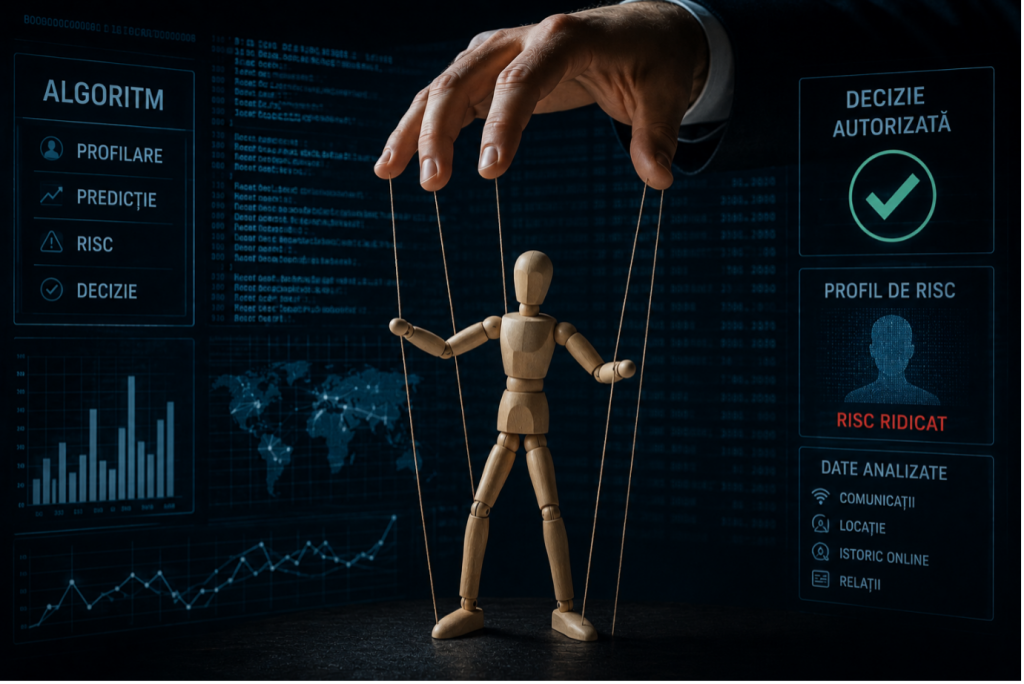
One of the most profound and troubling consequences of the use of modern predictive systems is the gradual transfer of decision-making authority from human beings to algorithms. This is not merely a matter of automating administrative processes or using technology as an auxiliary analytical tool. The real stakes are far deeper: a transformation in the way public power is exercised and justified.
In the classical architecture of the rule of law, a decision belonged to an identifiable person — the civil servant, the judge, the investigating officer or the administrative authority. The exercise of power was inseparably linked to accountability. Whoever took the decision could be held legally liable, could be reviewed by the courts and was required to state reasons for their acts by reference to the law.
This link between power and accountability is one of the foundations of modern legal civilisation.
Predictive systems, however, alter this logic in an unprecedented way. Today, administrative decisions, the prioritisation of investigations, risk assessment and even the identification of persons deemed potentially dangerous are beginning to be influenced by mathematical models developed by private companies and deployed within the State's institutional infrastructure.
Public authority thus begins to be mediated by algorithms.
At first sight, this transformation appears to pursue efficiency alone. Algorithms can process, in an extremely short time, quantities of information that no human operator could analyse. They can identify hidden connections, behavioural patterns and statistical correlations that escape conventional perception. From the perspective of security institutions, these systems are extraordinary tools for anticipating and managing risk.
Yet it is precisely here that the profound rupture in the logic of the rule of law occurs.
When an algorithm sets the priorities of an investigation, flags persons considered “high risk”, generates connections between individuals or assigns predictive dangerousness scores, it no longer functions as a mere technical tool. The algorithm participates indirectly in the exercise of public authority.
However, unlike traditional human authority, an algorithm cannot be heard, cannot be cross-examined and cannot be held accountable. It cannot provide a moral explanation for its own conclusions, nor can it answer for the consequences of the decisions it generates.
This situation gives rise to an unprecedented legal and philosophical problem: power begins to be exercised through mechanisms that possess no conscience, no accountability and no moral judgement.
Moreover, in the case of proprietary systems, transparency becomes almost impossible. Platforms developed by private companies are protected by rules on trade secrets, intellectual property and technological confidentiality. As a result, the exact criteria by which the algorithm establishes connections, prioritises targets or generates alerts remain inaccessible to citizens and, at times, even to oversight bodies.
Under these conditions, the very idea of democratic oversight begins to be undermined.
Citizens may suffer significant legal or administrative consequences without any real opportunity to understand the logic of the system that assessed them. Worse still, even the authority using the technology may not fully understand how the algorithm arrives at certain conclusions. This gives rise to the phenomenon of “algorithmic opacity”, in which the decision-making process becomes so complex that it can no longer be explained intelligibly.
This opacity directly affects fundamental principles of contemporary law:
Without the ability to effectively challenge algorithmic logic, there is a risk that citizens will be reduced to the status of objects permanently assessed by automated systems over which they have no real control.
The problem becomes even more serious in the context of the development of predictive artificial intelligence. Algorithms no longer operate only on existing facts; they generate inferences about future behaviour. A person may thus come to be assessed not for what they have done, but for what the system considers they might do.
This shift radically transforms the relationship between the individual and authority. Traditionally, the State punished specific conduct. In the predictive paradigm, the State begins to administer probabilities.
From this perspective, the fundamental question facing contemporary democracies becomes unavoidable:
Can there be genuine freedom in a society in which citizens are permanently assessed by systems that no one can fully control?
This question does not concern technology alone. It concerns the very future of the rule of law.
Because once an algorithm begins to influence the exercise of power without being subject to the same rules of accountability as human authority, there is a risk that a new form of domination will emerge: impersonal, automated power that is almost impossible to challenge.
And power that cannot be explained risks, in time, becoming power that can no longer be limited.
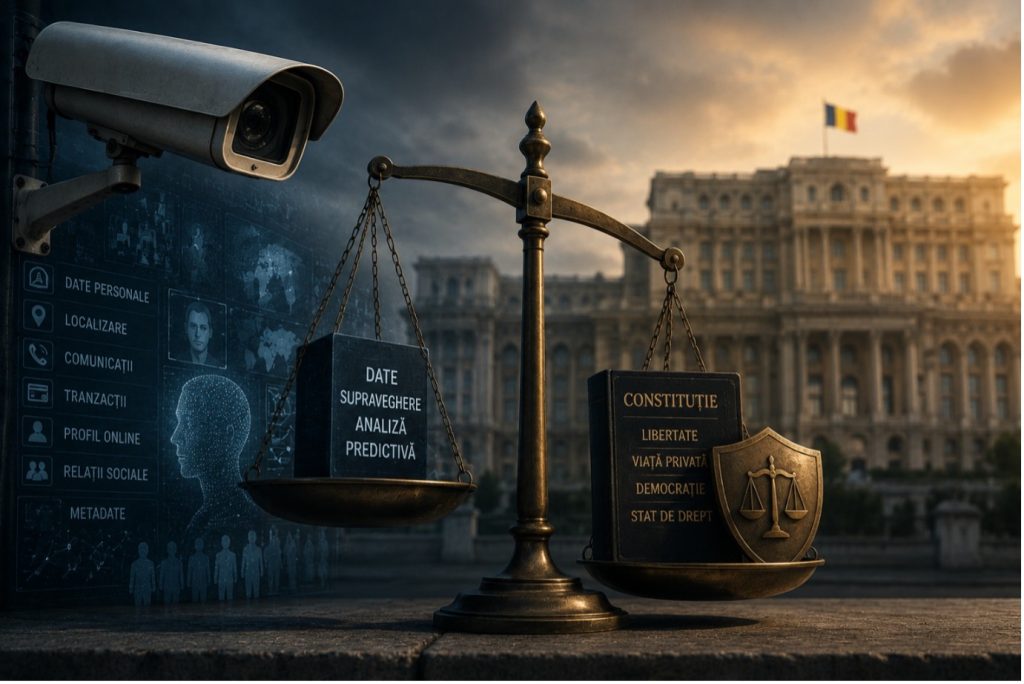
Technology in itself has no morality. It is neither absolutely good nor absolutely bad. It is not the algorithm that determines the purpose for which it is used, but the power structure that controls it, the political values that legitimise it and the legal limits that govern its operation. In every era, technological instruments have reflected the nature of the system that used them: in a democratic society they can serve freedom and collective protection, while under an authoritarian regime they can become sophisticated mechanisms of control and domination.
From this perspective, platforms such as GOTHAM cannot be analysed in a simplistic manner, whether purely critical or purely laudatory. The legal and political reality is far more complex.
Clearly, such systems can be legitimate and highly effective tools for combating terrorism, dismantling organised crime networks, preventing hybrid attacks and protecting public security. The ability to integrate vast volumes of information rapidly and to identify connections that cannot be detected by conventional methods can save lives and make a decisive contribution to preventing real threats.
In a world characterised by asymmetric conflict, cross-border crime and cyber-attacks, modern States can no longer function solely through traditional investigative mechanisms. The technological evolution of threats inevitably drives a technological evolution of security tools.
The fundamental problem, therefore, is not the existence of the technology.
The real problem arises when operational efficiency begins to be regarded as sufficient to legitimise the expansion of State power.
In the absence of robust legal safeguards, genuine oversight mechanisms and effective democratic transparency, the same technology that is capable of protecting society may become the infrastructure of a model of control incompatible with the constitutional principles of individual liberty.
This is one of the great contradictions of the digital age: instruments created to protect democracy may, in the absence of limits, end up transforming the very nature of democracy.
The danger does not lie solely in visible and explicit surveillance. Democratic societies react relatively easily against brutal and obvious forms of control. The genuine risk is far subtler and, for that very reason, far more dangerous: the gradual normalisation of the idea that permanent surveillance is the inevitable price of safety.
Once continuous monitoring becomes accepted as the natural state of the relationship between citizen and authority, freedom begins to change its deeper meaning. The individual is no longer seen as the holder of rights that limit the power of the State, but as a potential risk factor to be permanently assessed, analysed and managed.
This transformation produces a cultural and legal shift of great depth.
Constitutional democracy does not function solely through technological efficiency and administrative capacity. It functions through the existence of limits that power cannot cross, even when it invokes collective security. The rule of law entails not only protecting society against threats, but also protecting the individual against the authorities' constant temptation to extend control in the name of protection.
In essence, the true strength of a democracy lies not in its capacity to watch everything, but in its capacity to restrain itself even when technology allows it to do otherwise.
For this reason, democratic oversight, algorithmic transparency, independent auditing and the effective protection of fundamental rights are not obstacles to security but essential conditions for its legitimacy.
History offers a constant and deeply uncomfortable lesson in this respect: fundamental rights almost never disappear suddenly. They are not abolished in a single spectacular and visible moment. In most cases, freedoms erode gradually, through the accumulation of exceptions deemed temporary, necessary and justified by the political context of the moment.
Each extension of surveillance is initially presented as limited and indispensable. Each exceptional mechanism is justified by the existence of a serious danger. Yet once institutionalised, such mechanisms tend to become permanent, and what was the exception gradually turns into the rule.
This is the real legal and moral challenge posed by contemporary predictive technologies.
Not whether they can protect society — for they undoubtedly can.
But whether society will manage to use them without sacrificing, slowly and almost imperceptibly, the very values it claims to be defending.
The GOTHAM platform is more than advanced data-analysis software. It symbolises the emergence of a new paradigm of government: the State that can see almost everything.
For the first time in history, technological development makes possible the almost complete integration of social life into a single system for collecting, correlating and analysing information. Data on communication, movement, social relationships, online activity, daily habits and administrative interactions can be turned into a predictive map of human behaviour.
This power can protect society. But it can equally turn freedom into a mere appearance, administered by algorithms.
The fundamental issue of the digital age is not whether technology should be stopped — such an objective is impossible and illusory. No contemporary society can ignore technological progress, and States will inevitably continue to develop increasingly sophisticated tools for analysis and security.
The real issue lies elsewhere: whether the law will manage to remain strong enough to restrain the temptation of total control.
This question becomes all the more relevant in the current Romanian context.
The debates prompted by legislative proposal No 565/2025 show that the Romanian State, too, is entering a phase of accelerated transformation of its information infrastructure. Beyond the technical wording and the national-security justifications, the proposal reveals a clear trend: the expansion of the authorities' capacity to collect, integrate and analyse large volumes of personal data through the use of advanced IT systems and automated processing mechanisms.
Officially, the legislative initiative seeks to adapt security institutions to the new threats posed by terrorism, illegal migration, hybrid warfare and cyber-attacks. These objectives are undoubtedly legitimate in a geopolitical context marked by regional instability and rapid technological change.
Nevertheless, an analysis of the legislative text highlights an essential problem: the acceleration of surveillance tools is not matched, to the same extent, by a strengthening of democratic safeguards.
The possibility of automated processing of personal data by systems based on artificial intelligence, the lack of clear definitions of the digital infrastructures used, the absence of precise criteria for including persons in the analysis systems and the lack of effective independent oversight create the conditions for the emergence of a model of extensive surveillance that is incompatible with the constitutional requirements of the rule of law.
From this perspective, the Romanian legislative proposal is relevant not only for what it expressly regulates, but also for what it makes possible in the future.
In its current form, the law potentially opens the way to the development of information-analysis platforms comparable, within certain limits, to the GOTHAM or Palantir-type systems already used in other States. Romania need not formally import a technology such as GOTHAM for the functional logic of such a system to emerge gradually within the national institutional infrastructure.
The possibility of creating massive integrated databases, correlated by artificial intelligence and used for national-security purposes, is, in essence, the conceptual core of these modern predictive platforms.
In this context, Romania's experience raises an additional and deeply sensitive issue: the level of institutional trust.
Unlike other Western States with well-established traditions of oversight of intelligence services, Romania still carries the historical memory of the excessive surveillance carried out under the communist regime, as well as the post-1989 experience of repeated controversies concerning interceptions, cooperation between institutions and the limits of democratic oversight of the intelligence services.
The judgments in which the European Court of Human Rights has found violations by Romania — including those concerning unlawful surveillance, the lack of effective safeguards and the absence of genuine remedies — show that the main vulnerability lies not solely in the technology, but in the institutional culture of exercising power.
In this respect, the major risk is not only the emergence of high-performance information-analysis systems, but the possibility that they may operate within a vague, insufficiently supervised regulatory framework dominated by opaque mechanisms.
A digital surveillance infrastructure becomes dangerous not only because of the technical capacity it possesses, but because of the absence of limits defining its use.
The observations made by specialists, civil society organisations, the Legislative Council and even the Ministry of Justice point to exactly this problem: unclear concepts, a lack of precise definitions, insufficient independent audit mechanisms and the absence of genuine assessments of the impact on fundamental rights.
Moreover, the possibility of using artificial intelligence for the automated analysis of data raises a fundamental question for the future of Romanian democracy:
Can there be a genuine balance between security and freedom in a system in which the technological capacity for surveillance evolves faster than the legal safeguards intended to limit it?
This question is not theoretical. It bears directly on the direction in which the Romanian State may develop over the coming decades.
Because the real problem of the digital era is not whether technology allows extensive surveillance. It already does.
The real problem is whether democratic society will manage to retain control over its own infrastructure of power before that infrastructure begins, gradually and almost imperceptibly, to redefine the very idea of freedom.
Ultimately, the essential question is not how much the State can see.
It is how much of human freedom remains once the State begins to see everything.
Author: P.A.
Copyright © 2026. All rights reserved.
We use cookies that are strictly necessary for the website to work and, only with your consent, statistics cookies (Google Analytics) that show us how the website is used. You can change your choice at any time under “Cookie settings”.
