05/06/2026
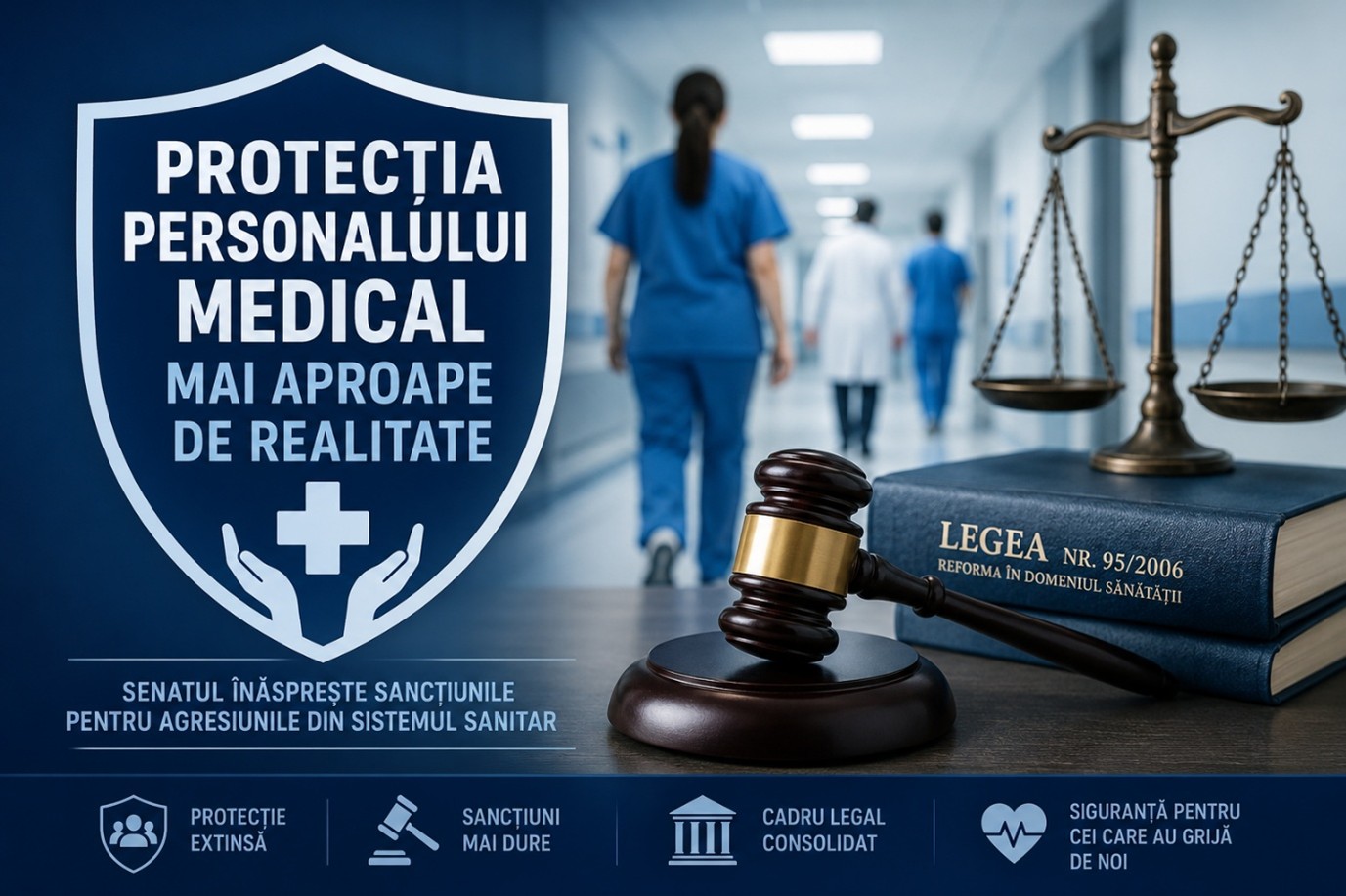
The Romanian Senate recently adopted a bill aimed at strengthening the legal protection of medical, auxiliary healthcare and non-medical staff against acts of violence committed in connection with the performance of their professional duties. Although the initiative must still be debated in the Chamber of Deputies, which is the decision-making chamber, the favourable vote in the Senate is a clear signal that assaults in healthcare facilities have become a major concern for the legislature.
In recent years, there have been numerous publicly reported cases in which doctors, nurses, healthcare assistants, medical receptionists or other categories of healthcare staff have been victims of threats, insults, physical assault or even acts of exceptional gravity. Beyond the direct impact on the injured person, such incidents undermine the climate of safety needed to provide medical care and can adversely affect the health system’s ability to respond to patients’ needs.
Medical and auxiliary staff often work in an environment characterised by pressure, medical emergencies, emotionally intense situations and difficult interactions with patients or their relatives. In such conditions, the risk of acts of violence is significantly higher than in many other fields of activity.
In this context, the legislature considered that the current level of protection does not sufficiently reflect the social importance of the work carried out by these persons or the risks to which they are exposed in performing their professional duties.
The bill amends Article 652 of Law No 95/2006 on healthcare reform and establishes a stricter penalty regime for offences committed against staff working in public or private healthcare facilities.
Under the new provisions, the penalties applicable to offences committed against medical, auxiliary healthcare and non-medical staff will be as follows:
Murder committed against persons protected by the provision will be punishable by imprisonment from 15 to 25 years.
Compared with the current wording of the law, the most significant change concerns the offence of assault or other acts of violence, for which the penalty range is increased from 6 months – 3 years to 1 – 5 years’ imprisonment, underlining the legislature’s intention to deter more firmly assaults against healthcare staff.
One of the most important elements of the amendment is the express clarification of the scope of protected persons. The new wording seeks to remove any ambiguity and to include explicitly medical staff as well as auxiliary healthcare staff and non-medical staff working in healthcare facilities, regardless of the form in which the profession is practised or whether the facility is public or private.
An important new feature of the bill is that enhanced protection is no longer viewed exclusively through the lens of the medical profession. In reality, the operation of a medical facility relies on the coordinated work of many professional categories, each contributing to the provision of medical services.
Nurses, healthcare assistants, medical receptionists and technical or administrative staff frequently come into contact with patients and their relatives and are exposed to the same risks of assault. The explicit extension of legal protection to these categories is therefore a recognition of the essential role they play within the health system.

From a legal perspective, the legislative initiative reflects the trend towards granting healthcare staff a level of protection close to that afforded to other professional categories that perform duties in the public interest and are exposed to heightened risks in the exercise of their functions.
The explanatory memorandum to the bill expressly highlights the intention to bring the protection of medical staff closer to that granted to categories such as police officers, military personnel and forestry staff. The rationale is clear: medical care is not merely an individual relationship between a professional and a patient, but a service essential to society as a whole.
Any assault on the persons who provide this service has effects that go beyond individual interests and affects the normal functioning of the health system.
From a technical legal standpoint, it is important to note that the bill does not introduce new offences into Romanian criminal law. Threats, assault, bodily harm and murder are already criminalised by the Criminal Code.
What is new is that the legislature has chosen to punish these acts more severely when they are committed against medical, auxiliary healthcare or non-medical staff in the performance of their duties or on account of acts carried out in the performance of those duties.
The amendment is therefore a form of additional criminal-law protection granted to a professional category regarded as essential to the functioning of society, achieved by raising the specific penalty limits and clarifying the scope of protected persons.
Harsher penalties undoubtedly have a symbolic and preventive role. They send a clear message that the State does not tolerate violence in healthcare facilities and that protecting medical staff is a priority.
At the same time, the amendment helps to strengthen the professional authority of medical staff and to create a firmer legal framework for combating assaults in hospitals and other healthcare facilities.
Nevertheless, the effectiveness of such legislative intervention will also depend on how the rules are applied in practice. Experience shows that merely raising penalty limits is not always sufficient to reduce crime. In parallel, preventive measures, clear intervention procedures, adequate security systems and effective mechanisms for reporting and investigating incidents are needed.
The bill adopted by the Senate is an important step towards strengthening the legal protection of healthcare staff. By explicitly recognising the vulnerabilities faced by doctors, nurses and other categories of staff, the legislature sends a firm message that violence against those who provide medical care cannot be tolerated.
If it is also adopted by the Chamber of Deputies, the amendment will reinforce the framework for protecting medical staff and help to create a safer environment for the provision of medical care. Beyond its punitive effect as such, the initiative also has strong symbolic value, reaffirming that respect for those who provide medical services is an essential condition for an effective and responsible health system.
Author: P.A.
Copyright © 2026. All rights reserved.
We use cookies that are strictly necessary for the website to work and, only with your consent, statistics cookies (Google Analytics) that show us how the website is used. You can change your choice at any time under “Cookie settings”.
