17/09/2026

Quick summary: Law No 239/2025 did not only change the minimum share capital of SRLs (limited liability companies) – it also amended the rules on the registered office. Meanwhile, ANAF (the National Agency for Fiscal Administration) is actively checking the addresses at which companies are registered and declaring companies with a fictitious or expired registered office tax-inactive. This article explains what every SRL must have on file, what it risks if it does not, and how to make changes correctly at the Trade Register.
For years, directors treated the registered office as a formality: an address entered in the articles of association and then forgotten. An expired loan-for-use agreement, an owner who no longer consents, a flat sold in the meantime – all of these were problems that “didn’t bother anyone”. Since 2026, things have changed on two fronts at once.
The first is legislative. Law No 239/2025, in force since 18 December 2025, amended Companies Law No 31/1990 in ways that also affect the conditions under which a company can prove its right to use the registered office.
The second is practical: ANAF has stepped up inspections at registered office addresses. Tax officials check whether the company actually operates at the address shown in the Trade Register – and if they find no activity, no company sign and no evidence of a real presence, the consequence is a declaration of tax inactivity, with everything that entails.
The two compound each other. A company that has not updated its registered office documentation risks finding itself simultaneously with a file blocked at the ONRC (the National Trade Register Office) – because any other corporate change, from a share capital increase to a transfer of shares, requires a valid registered office – and with an inactivity decision from ANAF.
and how to prove it
The company must demonstrate that it holds a valid legal title to the property declared as its registered office. This title may be:
Ownership. If the property belongs to the company itself, a land register extract or the sale-purchase agreement is sufficient. In practice, this is rare for small SRLs.
A lease. The company is a tenant at a commercial or residential address. The lease must be valid on the date any application is filed with the ONRC and must be registered with the competent tax authority, in accordance with the Fiscal Code.
A loan-for-use agreement (comodat). This is the most common solution for SRLs operating at the address of a shareholder or a relative. The owner of the property makes a space available to the company free of charge. This is where most questions – and most mistakes – arise.
A sublease. Possible if the main lease allows subletting, but rarely used for a registered office.

Does it have to be authenticated by a notary? Not necessarily. A loan-for-use agreement may be concluded as a private deed. The ONRC accepts it in that form, provided it contains the essential elements: identification of the parties, a description of the property, its intended use (registered office) and its duration. However, notarial form removes the risk of a later challenge and is recommended where the owner is not a shareholder of the company.
Does it have to be registered with ANAF? This misunderstanding is extremely widespread. Unlike a lease, a loan-for-use agreement does not generate taxable income for the lender, so it is not subject to the tax registration obligation applicable to rent. Nevertheless, in practice some local tax offices ask for the agreement for information purposes, and in the ONRC registration procedure the agreement must be filed as proof of the right of use.
What happens when the loan-for-use agreement expires and is not renewed? The company remains registered at an address for which it no longer holds title. Any subsequent application to the ONRC – a change of director, a capital increase, a CAEN code update – may be rejected by the registrar on the ground that the registered office is non-compliant. And if ANAF carries out an inspection at the address, the consequence is a declaration of tax inactivity.
Duration of the agreement. A loan-for-use agreement for an indefinite term seems advantageous, but in practice it can be revoked by the lender at any time. We recommend a fixed term combined with a prior notice mechanism that gives the company time to relocate.
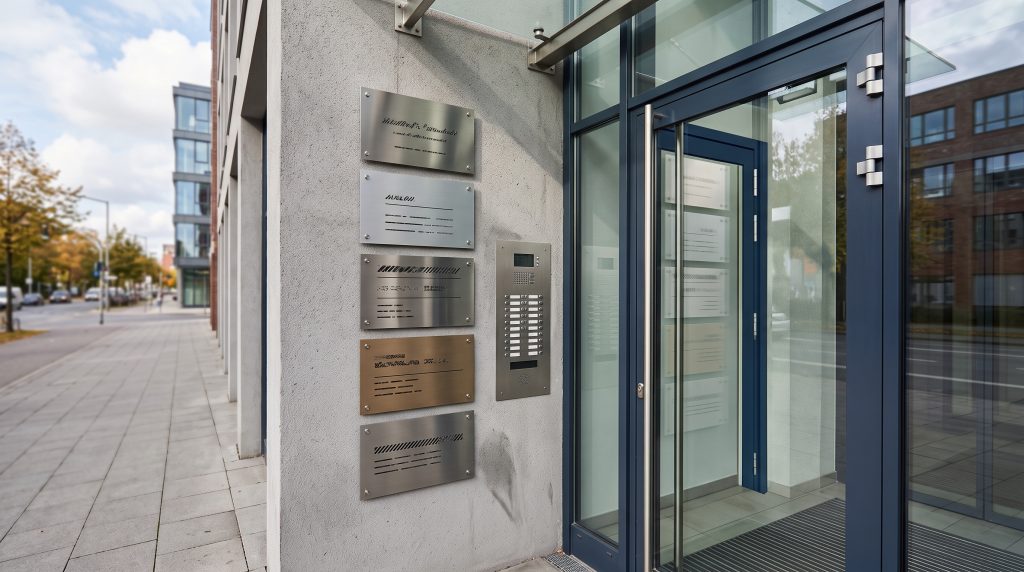
Yes, it is legal. The law does not prohibit several companies from being registered at the same address. There are, however, two real risks that directors systematically ignore.
The first risk: ANAF inspections. Addresses at which an unusually large number of companies are registered are actively monitored by the tax authorities. ANAF regards them as potential “ghost nests” – addresses where companies are registered on paper only, with no real activity. If the inspector finds nothing at the address to confirm that the company actually operates there (a company sign, an office, employees, correspondence), the procedure for declaring tax inactivity may begin immediately.
The second risk: refusal by the ONRC registrar. Although there is no statutory cap on the number of companies per address, the registrar may request additional documents showing that the property actually allows the declared activity to be carried out. A two-room flat at which ten companies are already registered may raise questions on any new corporate change.
Our firm’s recommendation: if you have several companies registered at the same address, make sure that each has a separate, valid agreement and that the address shows a minimum of evidence confirming that the company operates there – a company sign, a letterbox, correspondence that is actually collected.
The law allows the registered office to be established at the address of a law office, on the basis of an agreement concluded between the lawyer/law firm and the company. This solution offers an important practical advantage: the company’s correspondence is actually received, which removes the risk of missing notices, summonses or tax communications that, when sent to an address where no one collects them, can have serious legal consequences.
It is an option frequently used by companies that do not have their own physical premises, by companies in the process of relocating and by companies whose business is mainly online.

what it means and why it matters
ANAF may declare a company tax-inactive in several situations, the most relevant of which for the registered office are: the company cannot be found at its declared registered office, and the company does not carry on activity at its registered office or at its declared places of business.
The consequences of tax inactivity are severe:
Tax inactivity is not a mere administrative entry – it is, in practice, a commercial death sentence that makes the company unusable.
the procedure at the Trade Register
Step 1: Check the current documentation. Before any move, check whether the current registered office is properly documented. If the current loan-for-use agreement or lease has expired, the problem must be resolved – either by renewal or by relocation.
Step 2: Obtain the new legal title. A lease, a loan-for-use agreement or another valid title for the new registered office. If the office is moving to residential premises, check whether the owners’ association prohibits commercial activities in the building.
Step 3: Adopt the shareholders’ resolution / sole shareholder’s decision. A change of registered office is an amendment to the articles of association and falls within the powers of the general meeting of shareholders. The resolution must state the full address of the new registered office.
Step 4: Update the articles of association to reflect the new registered office.
Step 5: File the application with the ONRC, at the counter or online via the ONRC portal with a qualified electronic signature. The file comprises: the registration application, the shareholders’ resolution, the updated articles of association, proof of the right to use the new registered office and the sworn statement regarding operating conditions.
Step 6: Notify ANAF. After obtaining the certificate of amendments from the ONRC, the new address must be declared to the competent tax authority by filing a statement of amendments. If the registered office moves to another county, tax jurisdiction is transferred in full.

what to do if the company has already been declared inactive
If the company has been declared tax-inactive because of registered office problems, the reactivation procedure essentially involves remedying the cause of the inactivity, followed by an application to ANAF. Specifically:
1. Secure a valid registered office – with complete documentation, an agreement in force and evidence of operation at the address.
2. File all outstanding tax returns – tax inactivity will not be lifted if the company has unfulfilled filing obligations.
3. File the reactivation application with the competent tax authority, together with the relevant evidence.
4. ANAF may carry out an inspection at the new registered office before approving reactivation.
The process may take from a few weeks to a few months, depending on the complexity of the situation and the volume of outstanding obligations. Throughout this period, the company remains practically non-functional from a commercial standpoint.
1. The loan-for-use agreement expired three years ago, no one renewed it, and the company continues to operate “at the address in the articles of association” without any valid document.
2. The director increases the share capital to the new RON 5,000 threshold (following the procedure we set out in detail in a previous article), but the file is rejected at the ONRC – because the registrar finds that the registered office is not properly documented.
3. The owner of the property has sold the flat, but no one notified the company and no new agreement was concluded with the new owner.
4. Fifteen companies are registered at the address, ANAF carries out an inspection and declares all of them tax-inactive, even though the company in question was actually operating from there.
5. The registered office is moved without notifying ANAF, and tax jurisdiction remains with the old tax office, which issues administrative acts to an address where the company is no longer located.
Can I have my company’s registered office in my flat?
Yes. The law allows a registered office to be established in residential property. Proof of the right of use (ownership, lease, loan-for-use agreement) is required and, depending on the situation, the consent of the owners’ association or of the co-owners.
What happens if I have no agreement for the registered office?
The lack of documentation has no immediate, automatic consequences, but any interaction with the ONRC (an application for amendments, a CAEN update, a capital increase) may be blocked, and an ANAF inspection at the address may trigger a declaration of tax inactivity.
Do I need a company sign on the door and an office at the registered office?
The law does not expressly require these, but ANAF checks for them in practice. A minimum visible presence – a company sign, a letterbox, the ability to receive correspondence – is what distinguishes a real registered office from a fictitious one in the eyes of the tax inspector.
I have moved the company to another county. What else do I need to do after the ONRC?
Notifying ANAF is mandatory, and tax jurisdiction is transferred from the tax office of the old registered office to that of the new one. All filing and payment obligations are owed to the new tax office from the time of the move.
Can I use the address of a coworking space as a registered office?
Yes, provided there is a valid agreement (usually a lease or a service agreement that includes a registered office component) that the ONRC accepts as proof of the right of use. Check whether the operator of the space actually offers this service with the necessary documentation.
Does the loan-for-use agreement have to be authenticated by a notary?
It is not mandatory. The ONRC accepts loan-for-use agreements concluded as private deeds. However, notarial form is recommended where the lender is not a shareholder of the company – it offers greater legal certainty and removes the risk of a challenge.
of a lawyer specialising in commercial law is recommended
Registered office problems usually reach the lawyer’s desk when it is already too late: the file has been rejected at the ONRC, ANAF has declared the company inactive and the director has a tax offence record. Interventions at this stage are more costly and take longer than a preventive review.
A specialist lawyer verifies the validity of the registered office documentation, drafts or reviews the necessary agreements, prepares the file for changing the registered office at the Trade Register, ensures compliance with ANAF’s requirements and, if inactivity has already been declared, manages the tax reactivation procedure.
Our firm assists legal entities exclusively, with clients throughout Romania, in corporate compliance procedures, changes of registered office, tax reactivation and representation in commercial litigation.
This article is for information purposes only and does not constitute legal advice. For an analysis of your company's specific situation, please contact our firm.
Author: F.R.I.
Is this article useful to you?
Get it as a PDF on our letterhead, to keep or to share.
Get this article as a PDF
We will e-mail it to you on our letterhead, so you can keep it or pass it on to colleagues.
Copyright © 2026. All rights reserved.
We use cookies that are strictly necessary for the website to work and, only with your consent, statistics cookies (Google Analytics) that show us how the website is used. You can change your choice at any time under “Cookie settings”.
